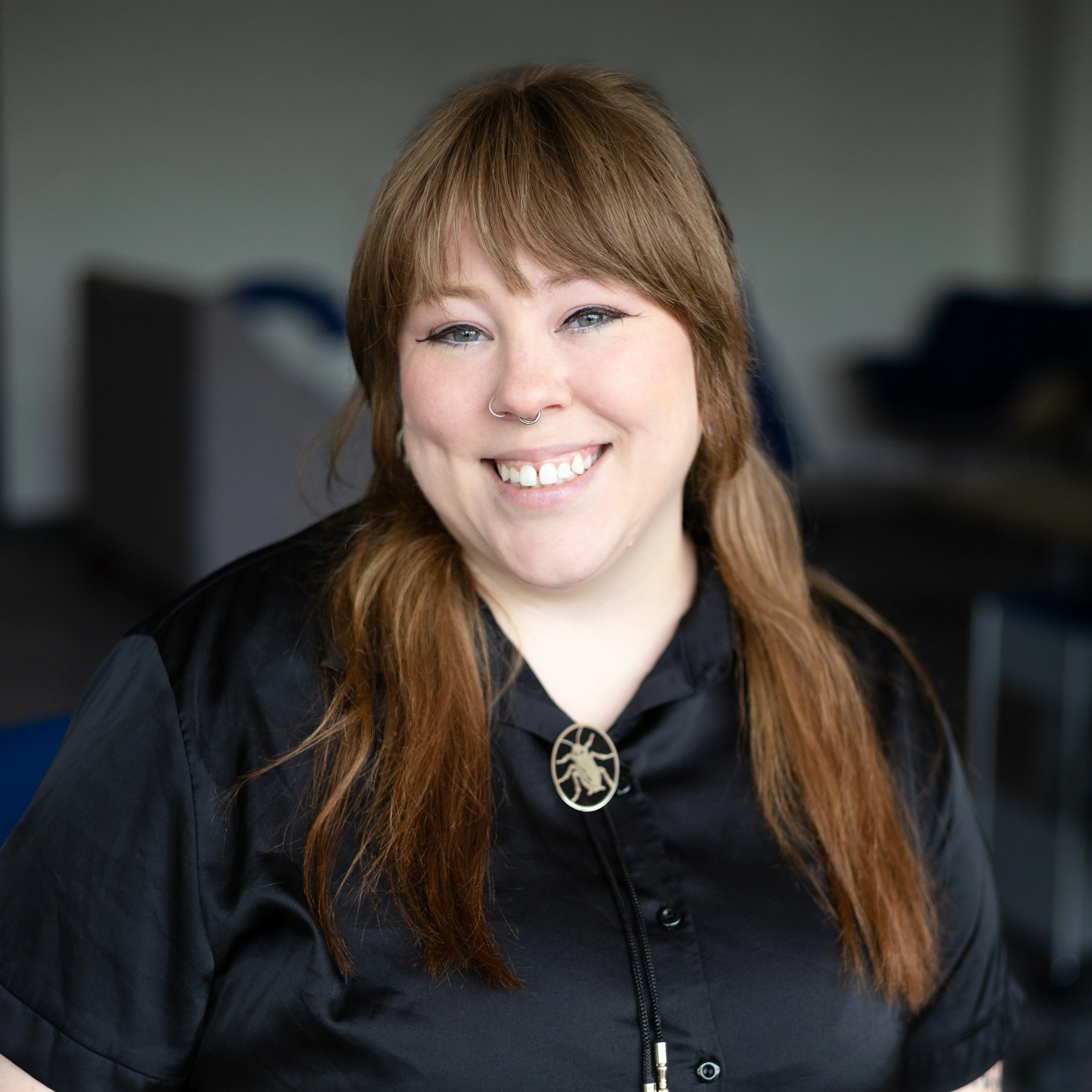
[00:00:00] Emily Hamilton: Thank you for joining us today for our webinar about detecting without digging the current state of lead service line technology.
[00:00:18] Really quick. My name is Emily Hamilton. I'm the Innovation Advocate and deal flow analyst for the Cleveland Water Alliance. My role entails a lot of the technical analysis of the solutions of our innovators. I'm on the front lines talking to them about where they're at in the development process and commercialization process, doing market analysis for the fit with the larger industry and also our stakeholders and helping guide them through CWA programming and services to support their needs.
[00:00:55] On this webinar, you're gonna learn about the regulatory landscape, the innovation process. We're gonna meet the two innovators who are the feature of today's webinar, and also what the next steps in the commercialization process entail. A quick matter of housekeeping, we will have time to have audience questions asked of the innovators.
[00:01:20] So if you have questions for either Tim or Ivan, please. Enter them into the Q&A at the bottom of your webinar screen and we'll get to those in real time. With live answers.
[00:01:36] Let's start off with a quick introduction to CWA and who we are as an organization. We are an economic development nonprofit organization, and we focus on development through the lens of innovation in the water industry. We build programs to help lower the barriers to development in commercialization of innovations and bridge the gap between stakeholders and solution providers.
[00:02:05] All of this is focused of course on water, the water industry. We have a confluence of partners that include utilities, academic institutions, major corporations, and of course our innovators. And some of the programs that we have to support this mission include our Lake Erie Watershed Test, or our Lake Erie Smart Watershed, which has 7,750 square miles of telecommunication coverage.
[00:02:36] We deploy over and maintenance over 200 sensors in the watershed. That are generating over 1 million data points annually to help our utility partners along the shoreline of Lake Erie with decision support and understanding the water quality of the drinking water that they access. We also have a test bed network that includes.
[00:03:03] The Smart Lake Erie Watershed that was mentioned above. We use those 200 plus sensors as a benchmark for new types of technology in the sensing and monitoring water quality space, as well as a range of different conditions available to anyone with environmental IOT sensing and monitoring technologies.
[00:03:24] It also includes the Cleveland Water lead service line research facility. You can see a map of that test bed right next to the the bullet points here. And it is a buried service line with controlled elements like the ability to fill it with water or empty it. It contains multiple different materials of service lines that include lead, galvanized steel and copper under various different substrates.
[00:03:58] So the innovators on today's webinar have access to this research facility and are able to test their technologies for lead service line detection in a blinded location with controlled conditions prior to going out into the natural environment and dealing all with all of those challenges that come with it, we have open innovation challenges, which is
[00:04:27] something that we do to seek to solve a problem that is present in the water industry that doesn't currently have a solution. So we go to the market, state the problem very clearly, and provide an outline for what the solution might be. This is the origin of our connection to the two innovators today when we launched an open innovation challenge specific to.
[00:04:52] lead service line detection without digging. We also have our Lake Erie Volunteer Science Network, which was an effort to standardize the collection of data across regional volunteer science networks so that data could be made actionable by a confluence of different interested parties and more reliable for us.
[00:05:20] Now getting into the origins of this lead service line, consideration for utilities the regulatory and landscape that kind of launched the interest in this. On October 8th, 2024, the EPA issued a final rule requiring drinking water systems across the country to identify and replace lead pipes within 10 years.
[00:05:47] The initial deadline was that by October 16th, 2024, all community water systems were required to sub submit an initial. Inventory to their state, highlighting the material of all lead service lines and to frame how challenging this requirement was, is that we didn't presently have solutions or technologies that were capable of identifying lead service lines with or materials generally without digging and depending on considerations and conditions in the field, digging up a single lead service line to look at it and determine the material could cost up to
[00:06:30] $1,800 in Cleveland, and that's not even considering the cost of what it is to replace that line. Cleveland Water maintains over 400,000 lines and utility services. And 140 K of them are suspected to be led. However, there's no way to determine that for certain until you dig down and actually look at the solution.
[00:07:01] And in the case of unknown service line materials, they have to be labeled as lead or lead status unknown for this inventory purpose, which would indicate that they need to be removed by the upcoming dates that I believe are in 2027. Many utilities utilize technologies that were the digitization and assessment of their records to identify the likely locations of their lead service lines, but also lots of those
[00:07:39] records are incomplete, un digitized, unreliable for a number of different reasons, and that can only get you so far. So the necessity for a solution that allowed for determining the location and materials of lines was critical to be able to complete this project. Many compliance states have been pushed back to 2027, and I couldn't presently find any instances of utilities being fined or penalized.
[00:08:08] For non-compliance at this point, but I do know that a lot of our utility partners are heavily focused on this project and engaged in the search for solutions to map their entire utility service area.
[00:08:28] In the year, in March of 2021. In preparation for these requirements from the federal EPA, we put together a panel of different utility partners. You can see their logos to the right of the text and we launched a request for technologies for the physical detection of lead copper and or galvanized steel service lines from water mains to commercial and residential properties without breaking ground.
[00:09:01] There were a couple of different aspects of this technology that were high in considerations such as not needing access to the actual home, where the lead, where the service line was connected because it is high. Very difficult to enter into people's homes as a utility on any sort of reliable basis. It needed to not enter into the actual pipe for fear of disturbing potential lead pipes.
[00:09:31] And it had a couple of different, oops, sorry of. Different criteria to be able to be considered for this challenge. After the close of that challenge, we learned that the state of the technology was a little bit too early to actually complete the open innovation challenge in a meaningful way.
[00:09:55] So we went back to the drawing board, we worked with panel of utility judges and we reconfigured the request for technologies into something that was focused more on technology concepts and providing resources to support the development of the technology because we were earlier stage than we had initially realized.
[00:10:20] So we evolved the competition to reflect that. We re-released in June of 2023, and one of the innovators that we will be hearing from today from Solinas won second place in that challenge and a grant for $25,000, along with mentoring and piloting support for the continued evolution of their technology.
[00:10:46] Drexel's technology. The other innovator that you will be hearing from today entered into the in innovations ecosystem after the close of the Innovation Challenge, open Innovation Challenge. But as a result of kind of us existing in this larger conversation and talking to many different organizations about solutions, and though they didn't participate in the challenge, we were able to provide them with a grant for $15,000.
[00:11:15] For prototyping support from our partners at Prodigy Product Development, who we work with to assist innovators with their prototyping needs or further development needs, and then also support Drexel in some of the softer resources like mentoring and piloting support. Both of these innovators were able to attend a tech showcase at the Cleveland Water service line research facility that engaged partners like the EPA and many other utilities.
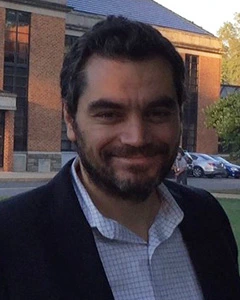
[00:11:52] That was in September of 2024. And without further ado, I'm gonna hand it off to our innovators to introduce themselves, and then we're gonna jump into our questions for today's panel. So firstly, I am going to hand it to you, Ivan. Ivan Bartoli is the professor of Civil Engineering and program Head at Drexel University.
[00:12:19] Ivan, would you like to introduce yourself?
[00:12:22] Ivan Bartoli: Thank you very much for having me, and thank you also for Tim, for being here. Yeah, Ivan Bartoli, I originally, I am from Italy. I started my research path over there when I moved to uc San Diego, where I got my PhD and moved to Drexel University in 2010 when I started collaborating.
[00:12:42] We have a bunch of folks there. One of them maybe the, this community is familiar with Chuck Haas, that is that used to be program head of our department. And we started working on this problem of the lead pipeline detection together with Chuck and Kurt Shalum, that was another researcher in the department.
[00:13:03] And we formed a team looking at an approach to find lead pipelines. That approach is based on stress weight propagation. I don't know, Emily, if you want me to talk more about the technology now or later on, but
[00:13:21] Emily Hamilton: we'll get into the principles behind the technology in just a moment.
[00:13:26] But I'd like to give Tim an opportunity to introduce himself as well. We have Timothy Preager on the call today. He's the COO of Solinas Technology. Tim, would you like to introduce yourself?
[00:13:37] Timothy Preager: Yeah. Thanks Emily, and thanks for framing up the discussion for today. I think we all realize how challenging the problem can be for sure in detecting non-invasive lines.
[00:13:47] Your point about record keeping and whether they're accurate or not, and how utilities are using some statistical based approaches to provide the service line inventories. Early on in our a journey. We spent a good a hundred sites testing thought spots, where we thought there was lead pipes, and the records were obviously incorrect.
[00:14:05] So we're well aware with some of the documentation that can be misleading. Yeah. So my name is Timothy Preager. I'm CEO of Solinas Technologies. I joined the startup company back in 2024 to really tackle and spearhead our detection technology for our lead finder product. And previous to that, my career was actually in acoustics, noise and vibration consultant engineering, where most of my work was in ground borne vibration of transit systems, subway systems, street cars, construction, noise and vibration.
[00:14:35] It's so very heavily laid on the engineering side for, ground point vibration. And I joined a previous business partner of mine who's our CEO of Mark Bracken who I actually founded Echo Logics back in the day in 2003 from our previous sister company. So we've got a lot of experience. In the water industry on acoustics and pipes and leak detection and all that physics that go along with that.
[00:14:56] And my primary role is to, lead the development of our technology group.
[00:15:02] Emily Hamilton: Excellent. Thanks so much, Tim. All right. We can jump in on our questions for today. I want to remind everyone that there will be opportunities to ask the panelists questions directly from the audience. Please use the Q&A feature
[00:15:18] be able to do that. My first question for our innovators, and we'll start with you Ivan, is could you provide a high level overview of the core principles behind your technology?
[00:15:31] Ivan Bartoli: Yeah. The technology is based basically on a small impact that is provided at location of curb stop valve through the extension road.
[00:15:41] So we take advantage of a typical extension road. It is used by utilities to open or close the shutoff valve. We don't enter the property in the house, or we don't need access to the basement or closed space. We do all the tests from the sidewalk effectively. We put basically on top of the extension road an instrumented an instrumented model.
[00:16:09] Hammer is a tiny hammer. Through that excitation, we generate waves that travel along the extension rod inside the pipe, and the energy leaks into the soil on, the surface of the soil, on both the utility side and the customer side. We put sensors that are picking up these vibrations that are effectively caused by the propagation of waves.
[00:16:34] By the analysis of the signal, we try to distinguish between lead and non-lead lines. We performed the test at in excess of 400 locations. We were involved with water research foundation study at a certain point, and we tested for different utilities that are primarily on, on the east coast and all the way down to Cincinnati.
[00:17:01] And that we tested for, I believe at this point, 10 different utilities. And at this stage we are in a range of a success rate of 82 to 83%. And the, when it comes to false negatives, meaning inaccurately and not identifying properly location where there are lead pipes. So we have a success rate of five outta seven in a blind test that was done.
[00:17:30] Meaning that we correctly identified five pipes as lead pipes, but we missed the two lead pipes and with our technology. And the last thing that I wanted to stress out one more time, so the technology does not require entering the house. Or so we don't have to contact the homeowner. And and the other thing that I like to stress out is that during the Water Research Foundation study, they sampled the water at the different locations where we tested just to make sure that we were not adding pollutants in the water.
[00:18:05] We were technology. And they came out, that the water was safe and there was no problem because they were afraid that the strike with the hammer could potentially displace some particles of a pipe in the water and that was not an issue. I'll be open to questions later on of course.
[00:18:23] Emily Hamilton: Yes. And Tim, same question.
[00:18:25] Can you describe some of the core principles behind the technology at Solinas?
[00:18:29] Timothy Preager: Yeah, sure thing. So our technique is, relies on the acoustics vibration signature of the piping system themselves. So similar to Ivan's technology we use a the access point that we use is usually in the curve box.
[00:18:46] They're directly on the valve using an instrumented service queue. So it has vibration sensors and a shaker device designed directly with that. With that rod system and we also rely on a few other sensors on the ground as well. But the primary function is to look for, again, the acoustic response to the technology.
[00:19:04] So we inject specific acoustic signals with that vibration shaker device, and we look how the whole system responds for an engineer in perspective. So you can imagine a copper pipe that might ring more than a lead pipe. If we do an analogy on acoustics, we may say, okay, if you're in a big, large atrium, you hear a lot of echoes.
[00:19:23] If you're in a really quiet room, like a voiceover studio and you don't really hear a lot of backwards within, within the room, and those, are the, prime basis of our technology. And once we get signatures and characters and different metrics for each different site, we use it or reference to a calibrated site of known materials, and that's how we're able to, do our detection methods.
[00:19:44] Emily Hamilton: Excellent. Thank you both for that explanation. Could you talk a little bit more about how deploying your technology at scale works, what the challenges are in different types of communities and infrastructure systems? What kind of considerations are going into the changing dynamics of an infrastructure system?
[00:20:08] And we'll start with you, Tim.
[00:20:10] Timothy Preager: Yeah, great question Emily. I think at scale we are we, are still looking for ways to improve the system methodology, the test method to make it easier for others to use. At the moment we're, still relying on, a service-based methodology to perform this testing.
[00:20:30] Our end goal for the future product is really to have a dumb kind of device for for lack of a better word, in terms of push the button, inject the signals into the system, collect the data, make sure it's good data, and then upload that to a cloud system where all the, brains and the operation happen.
[00:20:49] So we see that scale being certainly achievable. Some of the challenges I think, at scale that we're seeing from infrastructures are types of valves, the size of the valves, the certain service keys. We envision that. You have to have different types of instrumented, service key specific for certain utilities based on their infrastructure based on the shape of the curve box based on the valve dimensions that are on there.
[00:21:17] So those are things that, that we have in mind as, we look to scale up our operation.
[00:21:24] Emily Hamilton: And same question to you, Ivan.
[00:21:26] Ivan Bartoli: Yeah, so thank you Emily. And similar, observation to the ones made by Tim. So we interacted with different utilities. Some utilities were very interested in having basically the, prototype that we developed.
[00:21:41] And that then was, improved in the design by pro. They, were interested in in, in, into just basically having the, system themself and to use it themself. Other utilities, they prefer a different kind of approach where basically. Someone could do a service for them and test an X number of utilities in a certain period of time and basically have a contract based on that.
[00:22:08] It, it really varies a lot depending on the on what the scale, the size of the utilities. Sometimes it's counterintuitive. So we have a case of a very small utility that when they saw the technology in action, they said that seems something that we could manage ourself is not difficult.
[00:22:27] And perhaps the data analysis could be, again, achieved via, secondary step. Where even if the data collection is done directly by the utility, then we, will still be the one performing the of the data. Other things that came out throughout our interactions was really the, interest in our technology that did not require accessing the house.
[00:22:54] In the moment in which you access the house, you need to really, to have a lot of logistic ni nightmares because you have to contact the homeowner when you show up. The homeowner might not be there. And that is the best case scenario. The worst case scenario is that the homeowner don't want inside their house.
[00:23:11] There are situations like we are from Philly, Drexel, there are some areas that are really poor, and getting access to the house is not something that sometimes you wanna do because it's very difficult situations. So a technology that works without entering the property is ideal.
[00:23:29] Emily Hamilton: Absolutely. Thank you both for that.
[00:23:32] We have some questions coming in from the audience that we're gonna dive into. This is for you, Ivan. How do you analyze the signal and what principles do you use to analyze the signal,
[00:23:43] Ivan Bartoli: the signals? Similar to Tim, I have a background in web propagation. So the analysis of a signal is we look at different things.
[00:23:52] We, we look at more traditional approaches. That combine filtering the signal and looking at the features that are very common for w propagation, such as amplitude time of overall, and other features that are related to w propagation. Sometimes it can get really complicated. So you can look at what kind modes or propagation you are generating and what kind modes of propagation you are you're receiving.
[00:24:20] We looked also into other strategies like wavelet transforms that approaches where you look simultaneously at the time frequency features. And, again, the, I, at this point, I cannot specifically give you too many details, but a lot of it is already published. A lot of it is already published and can be found in publications, like some like journal non structured evaluation.
[00:24:51] So for more specific details, you can find them there.
[00:24:56] Emily Hamilton: Excellent, thank you. And this question is for both of you. Can you speak a little bit to the differences be between waves coming off of lead versus non lead pipes and what that might look like? Tim, we can start with you.
[00:25:10] Timothy Preager: Yeah, for sure. I think the.
[00:25:14] Probably the biggest difference between the two different pipes is really the thickness of the lead itself. Which can yield different physics in terms of the wave propagation methods. If we're talking certain types of modes and propagations you can imagine if you've got a circle it can breathe in different ways.
[00:25:35] It can, move up and down. First of all, it can expand and contract at the same time. It can warp around its edges. Depending on, the type of mode that's being excited in it they can run at different wave speeds as well. And so the predominant difference between the two pipes, if you assume for a minute the lead pipe is really thin, then you know you can get different wave speeds.
[00:26:01] The wave speeds can change by frequency. So if you imagine on the piano, if you play really low note, it runs at one speed, you play really high note, it can run at a different speed. So that changed the timing of the propagation between it. But the material parameters are really the, fundamental basis.
[00:26:16] Lead has a lot more damping or a loss factor compared to copper. That's why you get the thud versus the ping. And they have different, scientific parameter material parameters as well.
[00:26:29] Emily Hamilton: And Ivan, do you have anything to add to that? Very,
[00:26:32] Ivan Bartoli: very similar to what the Tim already mentioned.
[00:26:34] So when we first started to use the approach in the lab, we were really trying to generate waves traveling longitudinally into the pipe and at low frequencies. These waves are relatively simple and and the speed of wave propagation and something like copper is, tends to be much higher than the speed of propagation in a pipe that is made of lead.
[00:26:57] The problem is that when we test in the field, we cannot really easily generate longitudinal waves. We generate flexural waves and the situation becomes a little more complicated. But there are quite big differences acoustically, as Tim mentioned in the behavior with two different materials.
[00:27:16] Emily Hamilton: And this is another question from the audience. Does soil dampening have an impact on the signal?
[00:27:25] Ivan Bartoli: Yes, short answer is yes. So the, configuration of the sensor is such that the feature which we try to extract are not affected by by the soil or minimally affected by the soil, but clearly the soil the soil as an influence on the signal.
[00:27:45] The simple example could be that if you have a pipe that is five feet on the ground. Definition of a signal might be much, higher than a pipe that is at three feet underground. So we tested, for instance in the uk and in the uk there the pipes are in a configuration that is much.
[00:28:04] More shallow. So they're closer to the surface and we're getting signals that were way bigger at the same time. Then they have different hardware. Like Tim mentioned, they have completely different shutoff valves and and so we had to change a little bit of our hardware to adjust to the configuration.
[00:28:23] But yes, we saw it does in short, the soil makes difference. Yes.
[00:28:29] Emily Hamilton: And Tim an expansion on that question a little bit. So what about different types of soil types, different substrates a area with a number of trees or a creek? How do all of those factors play into the work?
[00:28:47] Timothy Preager: Yeah, great question Emily.
[00:28:48] And for our company we have another device that locates plastic pipes with no tracer wires. So it's an acoustic based products. We've got a lot of experience in seeing how those types of things can affect the acoustic signal along a pipe. But these are for larger pipes, but they also work for smaller pipes too.
[00:29:07] Yeah, the soil type for sure. Sand or silt or clay affects. Sort of the damping and the coupling between the pipe itself and, the soil. So something you have to know, you have, and we've got databases of waste feeds with certain types of, soil that are pretty well cataloged.
[00:29:25] Certainly you can get interferences from other things in the soil. So when we talk about tree roots or maybe there's two or three pipes that are maybe di abandoned can affect how the vibration propagates up into the soil. So there's certainly aspects of that we're finding. Provide additional variables in terms of what we need to overcome on the accuracy side.
[00:29:49] Emily Hamilton: Excellent. Thank you. Similar on that trajectory. What about the ability to detect other conditions within the pipes like rusting kinks, leaking variances of that nature for your technology if you're either utilizing it to do so now, or if it's possible to utilize it for that in the future?
[00:30:12] And we'll start with you, Ivan.
[00:30:15] Ivan Bartoli: The As I mentioned before, a little bit like Tim, my background is in way propagation and actually I use the similar approaches back in the days for finding defects in railroads, so cracks that sometimes can cause derailments and the same approach. I use it also for pipes with cracks, mostly for the
[00:30:35] gas and oil industry, and that is a very mature field of work and there are the players in that area because clearly there is a lot of money involved. So the short answer is you can use these approaches also to find problems in the pipes in terms of corrosion deterioration. Now the configuration which we are currently used is optimized for the problem of finding lead pipes is not optimized for finding defects inside the existing pipe.
[00:31:02] You would probably need to change configuration and look at slightly different hardware and software configurations. But it can be done. It is not easy, of course, because again, these pipes are underground under several feet of ground and the attenuation plays a role. So in that case, I suspect that entering the property, entering the house might be necessary depending on the specific problem that the user is trying to solve.
[00:31:33] Emily Hamilton: And Tim, same question.
[00:31:35] Timothy Preager: Yeah, I would echo what Ivan is saying. There, there's other companies that are dedicated towards pipe condition assessments, right? For, larger water mains. Certainly it's similar in terms of the physics and the nature. Acoustic based methods or acoustic vibration responses, whatever you might wanna call it.
[00:31:54] So I think the, and the, same would be true for leaked as well. So there's lots of different products that have different leak detection. So it's on the same plane, in the same band of technologies. Certainly you can adapt pieces of it to it. But I think from a as Ivan is saying, from a dedication perspective, the focus is really for, the material.
[00:32:13] At one point we were looking at. A method to find tiny little pinholes and copper pipes is something that we still might look at in the future as we progress through our technologies.
[00:32:24] Emily Hamilton: Thank you both. Yeah. I can say from the CWA side, we have talked to a lot of innovators with leak detection style technologies or infrastructure assessment technologies.
[00:32:35] It's a fairly mature market, and despite that wealth of solutions around that issue, what we don't see is your style of solutions for material detection. It, this seems to be where the where the need really is for further development in a lot of ways. From the audience we have a question about the depth limitations for the applications of both of your technologies.
[00:33:06] If you could quickly speak to that, we'll start with you, Tim.
[00:33:10] Timothy Preager: Yes. Depth is a factor that we track at the moment. Ivan touched on it a bit earlier. Shallow of the pipe the less attenuation, the wave comes up in the soil so you get a higher vibration response and potentially you can probably get more information from an acoustic base method than you would if it's deeper.
[00:33:30] So it is, an input to our to our metrics and to our signatures that we retract. Certainly I don't see it really as a limitation. I do see it as a potential benefit if it's for a shallower pipe that you can get more information. So I foresee that as. As being beneficial for shallower pipes.
[00:33:51] We haven't done a whole lot on shallower pipes. It's something that we still is on, our road list to do. Most of our testing currently has been in colder climates. Maybe it's 'cause we're from Toronto, that's the case and in Cleveland too. But certainly that's one direction that we'd like to get to.
[00:34:11] Emily Hamilton: And for you, Ivan.
[00:34:13] Ivan Bartoli: So, all the tests that we did for all the different utilities, I think that the deepest the pipes were, about six feet. I think that was the, really the limit. And our signals were slightly weaker. They were weaker, but we could still perform the testing and collect sufficient data and and make predictions for those locations.
[00:34:37] As of now. We were, we did not have that as a considered as a problem, and as I mentioned before, when we tested in the uk the pipes were way more shallow. So the only challenges are a little bit of a site configuration the, different hardware that can be used. But typically when we perform testing, we communicate with the local technicians of the utilities and they, provide the hardware to open the different the different opening for the shutoff valves.
[00:35:09] So that ends up not being a problem usually.
[00:35:15] Emily Hamilton: And then just a clarifying question from the audience if we could simplify this down to it to its most basic concept. The deeper it goes, the weaker the signal will be. That's correct. Which seems very intuitive, correct? Yeah.
[00:35:30] Ivan Bartoli: Yeah. So that's correct.
[00:35:32] You, can imagine that in the likely scenario that you decide to bur me on the ground, I'm gonna, you're gonna be able to hear me screaming only I'm very close to the surface. Okay? So if you wanna provide, yes, a very dark example,
[00:35:47] Emily Hamilton: a morbid accurate example.
[00:35:55] We're gonna step away from some of the technical questions and ask a little bit more about the innovation journey and the commercialization journey that you both are on. Starting with beyond the technical hurdles, what has been the most significant challenge in the innovation and development of this technology?
[00:36:13] And we can start with you, Tim.
[00:36:15] Timothy Preager: Yeah. I think there's a few things. Probably the, biggest factor is the cycle time of, verifying a material. So when we go and do a test and maybe a month or two months out before you get the results. So to get that feedback loop of where you are in the technology, how good you're doing that, that I think is one of them.
[00:36:41] But probably the more challenging one is I think the quantity of data. I think when we first started into this journey. I've still got copper and, lead pipe set up in my garage. At the moment, we thought we could do our analysis in the lab. Measure 10 or 20 or 30 lead pipes, off we go.
[00:37:00] And certainly we found out very quick that the problem is obviously a lot more complex than that for the reasons that we're, discussing. So to get the quantity of data to, to narrow down the amount of variables to a minimal amount such that we can be confident at a really high rate is probably our largest problem.
[00:37:19] 'cause that just takes a lot of time it takes, well as, we've talked about, it's taken years at the moment, right?
[00:37:24] Emily Hamilton: Right.
[00:37:25] Timothy Preager: Yeah.
[00:37:26] Emily Hamilton: Absolutely. CWA finds very frequently that during the innovation journey and the development journey time is one of the challenges that innovators are facing, and it's a lot of hurry up and wait.
[00:37:39] It's really, critical to get everything done right now, and then you have to wait a really long time for the next step.
[00:37:45] Timothy Preager: Exactly.
[00:37:46] Yeah, so I think just a second on that too. You, try things over and over again and you wanna really, especially as a startup company, you could try.
[00:37:54] New things, you wanna see if it works or not. And then if it does, you gotta pivot quick. I'm gonna do something else.
[00:37:59] Emily Hamilton: Absolutely. And Ivan, the same question for you. What were some of your hurdles outside of the technical aspects?
[00:38:06] Ivan Bartoli: Logistics is is critical. So when we did testing in the lab, everything was great.
[00:38:13] But when we started to test in the field we were lucky that we were part of this water research foundation study. There were logistical issues related to organizing and so on. And, but there was also the problem of what is ground truth? So some utilities really provided us the ground truth.
[00:38:32] So they excavated after we did the testing and they confirmed. What the material was. Other utilities considered ground truth the records and unfortunately the records were not accurate. And we observed that multiple times. And, sometimes if you make changes or tweaks to your technology based on information, which is not accurate, then you, are basically at the fork road and instead of taking the right path, you take the wrong path.
[00:38:59] So that occurs during, occur. During the, our process the, excavation of course is com is complicated and costly. So we totally understand the, challenges with utilities. The other thing is some utilities, which are in the cities. Sometimes we have pipes made of different materials, and even if they do excavation they do excavation allocation and they claim that the pipe is of that material for the entire length.
[00:39:22] But that is not the case. Some, other utilities provided as the ground proof by basically looking at the basement and looking at the piece of material that is visible near the meter in the basement is very common, at least around where I live. And also that one turned out to be not accurate as a ground truth, because often there are types of different materials.
[00:39:43] So there are, a lot of things that are that slow down the process and the progress at which we are, moving. I think that these are the first thing that come to my mind for sure.
[00:39:58] Emily Hamilton: Excellent. And Tim, this is a question for you. You were the second place winner of our open innovation challenge, and with that came some grant money, but also resources in engaging with some of our utility partners who helped shape the challenge and then also access to the service line research facility at Cleveland Water.
[00:40:22] And do you have any examples of how that worked to help shape your development process? What some of the learnings from that are?
[00:40:31] Timothy Preager: Yeah, a great question. I think it, it set us on a, path to know what we needed to test before we get into the field. So the research facility was great known materials. Very common setup acoustically, almost as identical as in the field. Some, minor differences. We spent a lot of time there. I think we, we went three or four times, and each time we were there, we spent two or three days on the facility, right?
[00:41:05] So a lot of details, that's where all the specifics and the nuances of the acoustics and the testing and the methodology were really hammered out. So to be able to have that done at one place. Very calm environment, great people very helpful. And to do that in one spot rather than go house to house in the field, I think saved us a lot of time in our development process and really helped us move forward faster than, if we didn't have that available to us.
[00:41:37] Emily Hamilton: Excellent. And Ivan, this is a question for you. As a part of CWA's support for your solution, we provided funds so that you could work with our partners at Prodigy for assistance with prototyping development or productizing development. Can you talk a little bit about the learnings from that collaboration?
[00:42:00] Ivan Bartoli: That, that collaboration was one of the highlights of my experience? Because first of all thank you Emily and thank you for putting me in contact with Paul Holman. Is made professionals. We are researchers. We are not we are not company. We are not a startup either. With kind of knowhow and the kind of ability to, move at very high speed.
[00:42:23] So basically Prodigy came out met I they, looked at our system. They asked a lot of questions. They were able to look at what we developed as a system and the ability to, design things that can be manufactured. So they look at our system from a point of view, someone that can manufacture the prototype at large scale.
[00:42:48] And so they came out with a design that is actionable. They call it I believe alpha prototype. That is something that could be deployed in the field much more rapidly and only by one user, because currently our prototype. It's two people. It can, it could be used by one person, but is a little bit not, trivial.
[00:43:09] So you need two people in the field. And another goal was to expedite the data collection. So right now, in a good case scenario, we can test at 20 pipe per day. 20, 20 locations per day. That means 20 pipes on one side utility, and 20 pipes on the customer side. But sometimes it's more complicated just given the conditions.
[00:43:34] So they came out with solutions that would be working even with different weathers. So when it's when it rains, we can test, but that slows down our testing protocol. They came out with solutions that will not be affected by the weather, by the rain, for instance.
[00:43:52] Emily Hamilton: Excellent. Thank you, Ivan. We have another question from the audience that is, I think, a nice encapsulation of a lot of the things that we've been talking about.
[00:44:03] But in your own words, can you talk a little bit about the key issues that still need to be resolved in order to have this lead service line detection technology the work in the field in the majority of cases, and we can start with you, Tim,
[00:44:21] Timothy Preager: the issues in the field. Yeah. Yes, Yeah. I, think probably still comes back to, the quantity of data, right?
[00:44:32] So I, yeah, I think it's to be on repeat here, but it's a matter of, in my opinion, it's a matter of time to get there and if I'm speaking from a utility perspective, I think maybe the key issues might be around probably false negatives and what that might mean before people are able to adopt it.
[00:44:52] And what kind of risk, if any can be taken by utilities. We, talked about this before Emily, that currently with re regulations, there probably are still some false negatives that occur in the field. So that's something that we are looking to get more information from and more opinions from others to see where they lie and, what they can or can't accept.
[00:45:21] And to get just a different kind of thinking from the utilities and what they can do.
[00:45:28] Emily Hamilton: Excellent. And Ivan, same question. What are the challenges for you?
[00:45:34] Ivan Bartoli: Yeah, I think that again Tim did a good job in going after the most important things. How many false negatives are considered acceptable or, if there are no false negatives acceptable at all.
[00:45:47] That's understandable. I, realized after having conversation with different utilities, but even excavation sometimes does not eliminate the force. Negatives because excavation occurs locally not for the entire line of the pipe. And so if you excavating a location where the material is okay, but then there is a missing piece of a pipe that is still made of lead when you did not solve the problem.
[00:46:11] We interfaced with some utilities that were originally at the beginning of our project. They would, be satisfied with the current rate of success that we achieve. But other utilities instead, they want absolutely zero force negatives. So it, is it is something that is a target that changes depending on who you are talking to.
[00:46:32] And again, data collection, testing more in the field makes a big difference for any technology, not just not just ours, because when you do things in the lab, everything is under control. Everything is perfectly known. But when you do things in the field you really learn a lot about the complexity of a problem.
[00:46:50] And and that is where we learn the most about our about our approach. So for us, testing more would be important for sure.
[00:47:00] Emily Hamilton: Excellent. Thank you. And another question from the audience is I, think that you've covered a little bit of this in, your previous answer about this just takes time, it takes data, it takes the opportunity of piloting in various different real world environments.
[00:47:19] But where do you stand now in your commercialization journey for LSL Node Dig detection, and we'll start with you, Ivan, and the Drexel technology.
[00:47:29] Ivan Bartoli: So, I'm not the perfect person to respond to that. I'm more like a researcher than an expert from this point of view. But we have a support of Drexel from a, unit that is specialized in patenting and so on.
[00:47:42] So we have a couple of pending patents and we have a couple of patents that were already approved. And their goal right now is to try to license the approach to potentially interesting, interested parties. And they are helping me out from that point of view. So they shifted from performing additional tests in the field because they thought that the technology.
[00:48:07] Reach a point in which the data collection at large scale could be achieved better by some company that perhaps start to use these intensively in the field with a larger scale. At this point, we collected data at four to 500 locations. I don't have exact number in front of me, but definitely more than 400, short of 500 I believe.
[00:48:26] And so we tested a lot as a university, but we cannot continue to test ourself. We need someone else to do the testing.
[00:48:34] So that is where we are.
[00:48:37] Emily Hamilton: Excellent. And the university context can be a very wonderful place for the development of research and technology and have a lot of support systems, but can also be, like you mentioned very research heavy and conceptual in its support.
[00:48:56] So taking it out of the academic environment can sometimes be a challenge. I know. And Tim, same question to you. Where is Solinas at in their commercialization journey?
[00:49:09] Timothy Preager: Yes. Yeah, thanks Emily. We. We may have the opposite problem, may not so much. So just different from a different perspective.
[00:49:16] Obviously we're privately funded. But we do have a large runway to go to continue to develop this technology. We've probably done a little under 400 measurements in terms of total data collection and it continues to way, we're finding ways to accelerate that. I would say we're in the val field validation stage with, our technology.
[00:49:37] So we've got, four pilot programs under the, goal right now, at the moment. Some of 'em larger than others, some taking years, some taking months. We envision full commercialization hopefully soon, and I can't give an answer on that just yet obviously. But it is, that's obviously our end goal as we work towards that.
[00:50:05] Emily Hamilton: Wonderful. Those are all my questions for the two of you. I wanna give you, just all the thanks in the world for your participation today, but also for the work that you're doing. And we're so grateful at CWA for our continued collaboration. I've had the pleasure of working with you both for almost, I think, three years now, which is hard to believe.
[00:50:33] And we look forward to supporting both Drexel and Solinas while they continue their commercialization journey. If folks want to reach out to you is there a way that is best to do that, Tim and Ivan?
[00:50:48] Timothy Preager: Yeah, I think by my email is fine. It's great. I think you are welcome to share that to the registrants here.
[00:50:54] That's no problem. That
[00:50:54] Emily Hamilton: fine?
[00:50:56] Ivan Bartoli: Yeah, same. Same for me. You can access directly to my direct cell email and you can clearly find me on Google by just looking at Drexel and Ivan Bartoli.
[00:51:06] Emily Hamilton: Wonderful. Thank you both. And thank you to the audience for your engagement and the wonderful questions you asked today for taking the time out of your lunch hour to, to join us on this webinar.
[00:51:20] And also I'd like to encourage you to stay up to date with, this and more topics through our blog on the Cleveland Water Alliance website. I know one of our audience members asked about the anticipated regulatory landscape for the lead service line issue, and that is a, that's changing. Over time, and we will certainly do our best to keep everyone updated on how those things are going.
[00:51:50] As it stands presently, a lot of extensions have been granted for into 2027. But we'll, stay on top of that as well. And you can sign up with our newsletter or our innovator bulletin if you are interested on staying on top of those, that information. With that, I'd like to say thank you to everybody and have a wonderful rest of your Wednesday.
[00:52:17] Timothy Preager: Thank you, Emily. Thanks a lot.
[00:52:18] Emily Hamilton: Thank you.
[00:52:19] Timothy Preager: Thank you.
[00:52:20] Emily Hamilton: Bye.


.webp)


.svg)

