
.webp)
Artificial intelligence water technologies rely on specialized machine learning models to transform various types of data, including environmental, into early warnings and predictive analytics for flood risks, plant operations, infrastructure management, and more. Cleveland Water Alliance advances these promising innovations by providing high-quality, real-world data to assist with training their algorithms.
Listen to this article
Artificial intelligence (AI) is a buzzword for industries across the globe, but its application in the water sector serves a distinct, highly practical purpose. While everyday AI applications often focus on text generation or broad search tools, water technologies rely on specialized machine learning and targeted, highly accurate data from a multitude of sources, including the natural environment.
Machine Learning vs. Large Language Models
Large Language Models (LLMs) and Machine Learning (ML) are both forms of artificial intelligence, but they analyze different types of information. When most people encounter AI, they interact with Large Language Models (LLMs) like ChatGPT or Claude, these systems are built to analyze vast amounts of text and produce conversational responses.
In the water industry, software platforms instead leverage specialized Machine Learning (ML) operating on closed, highly secure datasets. Rather than processing words, these platforms process numbers, trends, and physical conditions.
“In the case of the water industry and the ways that we're seeing AI utilized, these are not large language models. They're closed systems of data that utilize artificial intelligence to then assess different outcomes, assess the data, and give you some sort of returned information that can be used for public safety or water management actions."- Emily Hamilton, Innovation Advocate & Deal Flow Analyst, Cleveland Water Alliance
Within water technology, AI integration often falls into three core areas:
- Sensing and Monitoring Analytics: Processing streams of continuous environmental data (such as water levels, flow rates, or chemical parameters) to uncover patterns, generate early warnings, and deliver actionable insights.
- Operations and Facility Optimization: Software platforms that evaluate treatment plant or manufacturing facility processes to automate routines, optimize energy consumption, and reduce operational costs.
- Risk & Asset Management (Predictive Infrastructure): Algorithms that analyze pipe conditions, soil moisture, traffic, and age of materials to predict where water mains are likely to burst, where leaks exist underground, or where flood risks are highest before disaster strikes.
How Predictive AI Supports the Water Sector
Historically, analyzing water data required human operators to manually compile numbers, run spreadsheets, and generate static graphs. This traditional, reactive approach limits how quickly water managers can respond to emerging issues.
Machine learning models streamline this process by analyzing massive datasets far faster than a human operator could. These systems move the sector from reactive monitoring to predictive analytics, allowing utilities and decision-makers to anticipate risks before they escalate. Shifting to a proactive framework enables water managers to prevent costly infrastructure failures, save operational time and public resources, and mitigate environmental threats before they become full-scale disasters.
As a machine learning platform receives more continuous data, its algorithms adapt, becoming increasingly precise at predicting various concerns like localized flooding, pipe integrity issues, or shifting water quality conditions.
Why AI Models Need Real-World Data for Training
An AI model's output is only as trustworthy as the input data used to build it. Without accurate, continuous baseline data, even the most advanced algorithm will generate faulty predictions.
"There's a phrase in AI modeling, 'Garbage in, garbage out.' It's critical that the data be accurate and reliable... As a general rule, the more data, so long as it is good and accurate data, the better. It's more effective at training your model." shared Emily.
Location-specific data is essential for technologies looking to enter the Great Lakes market. Because of the region’s unique conditions, AI models trained in different climates or on other bodies of water must be retrained using local Great Lakes data to work accurately and reliably here.
How CWA is Accelerating AI Innovation
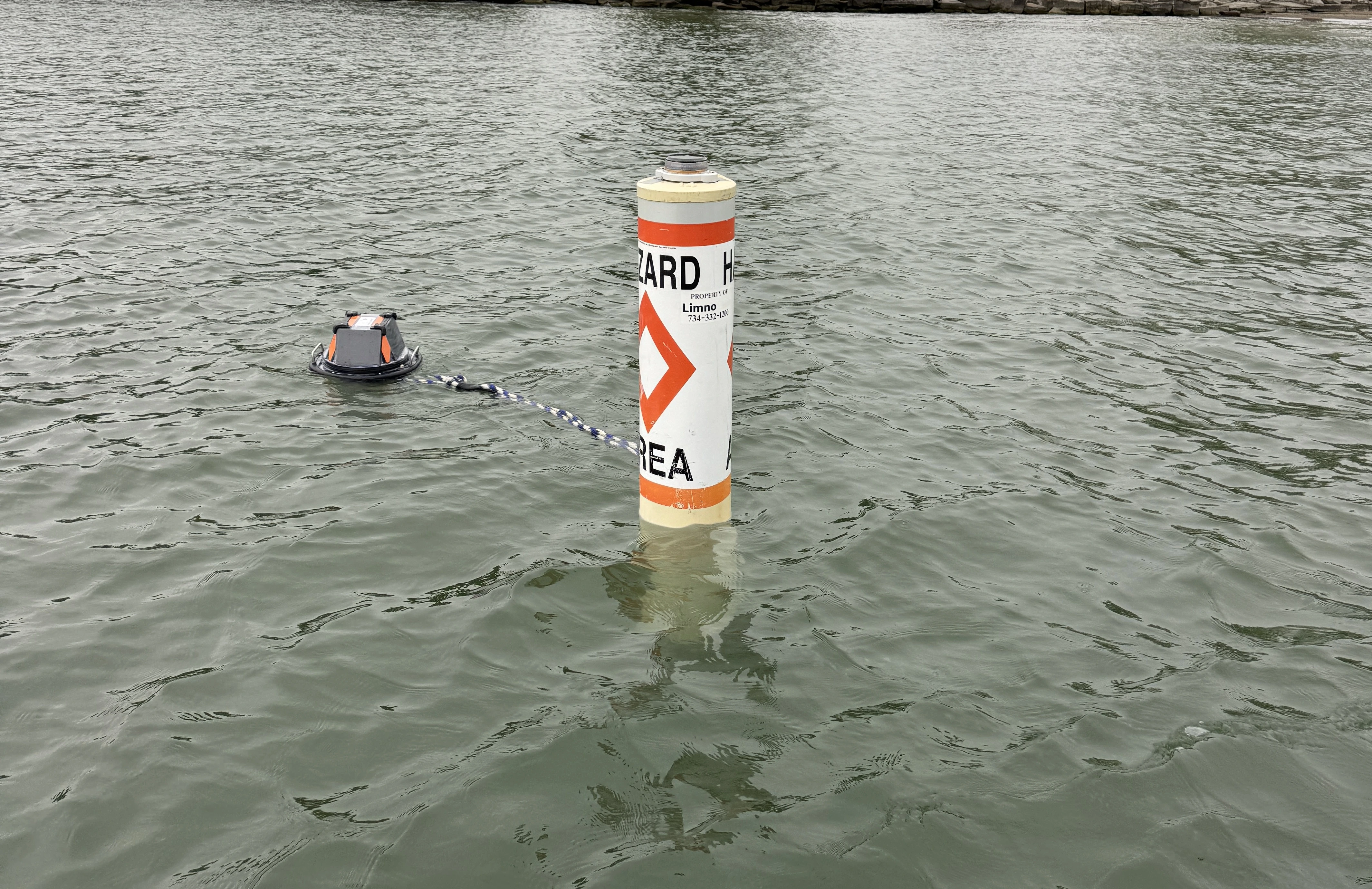
Cleveland Water Alliance supports a wide variety of water technologies through our testbed infrastructure, ranging from physical sensing hardware deployed directly in the field to advanced software platforms.
CWA collects over a million data points annually across Lake Erie. This real-world environmental data serves as a vital resource for emerging technologies. By accessing this historical and live sensor data, innovators can train, validate, and refine their AI models to ensure they deliver precise, reliable predictions in real-world freshwater environments.
"These solutions are becoming increasingly common and they're extremely data hungry. CWA's data that we have been gathering for several years now across the Smart Lake Erie Watershed is critical to be able to train a lot of these different models." states Emily.
Supporting the Growth of AI Water Tech
As adoption accelerates, AI-driven predictive technologies are rapidly proving essential for anticipating environmental shifts and modernizing water management.
"AI-based technologies aren't going anywhere," Emily reflects. "I foresee no slowing down of this type of deployment in the future. These solutions are becoming increasingly common... and smart systems will be necessary for predicting the future and what will come with flood risks, increased storm events, and an ever-changing environment."
By providing a real-world testbed network and access to historical watershed data, Cleveland Water Alliance ensures that promising freshwater innovations can effectively train their systems, scale, and protect our water resources.

.svg)


.webp)

.webp)
.webp)


