CWA worked with UVM Wireless Intelligent Sensing Electronics (WISE) team to deploy their autonomous wireless drone sampling and sensing platform in Lake Erie, the largest body of water they had ever tested. This real-world trial provided critical data that helped the UVM researchers refine the system's hardware, software, waterproofing, and sensor capabilities.
Listen to this article
.webp)
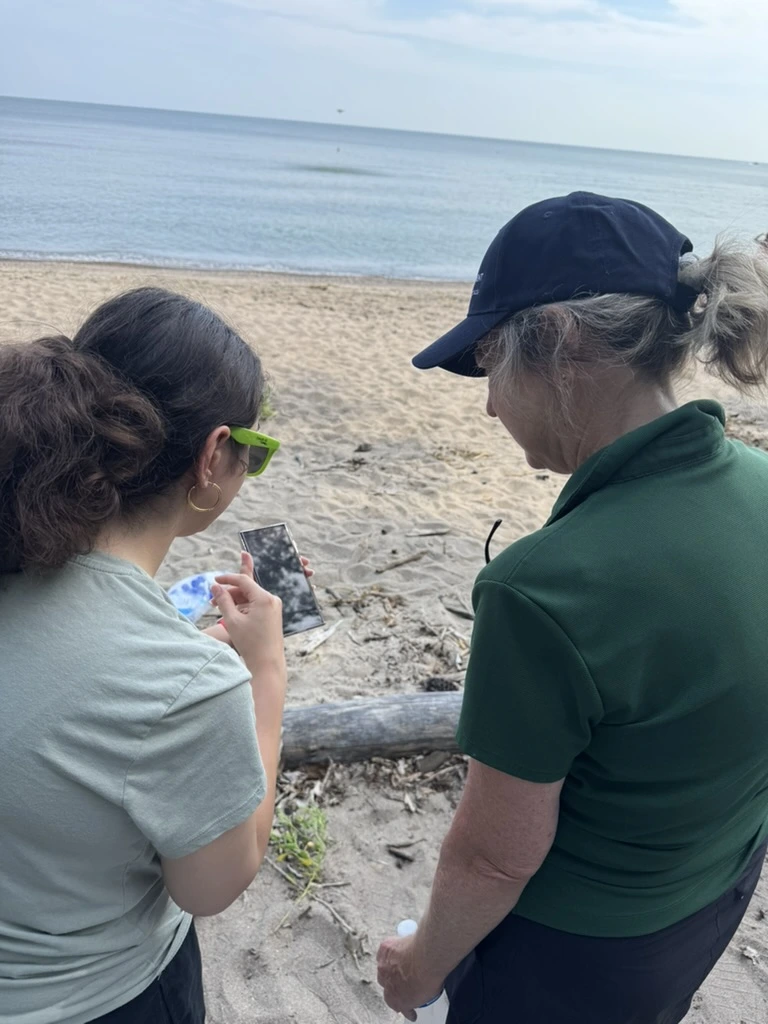

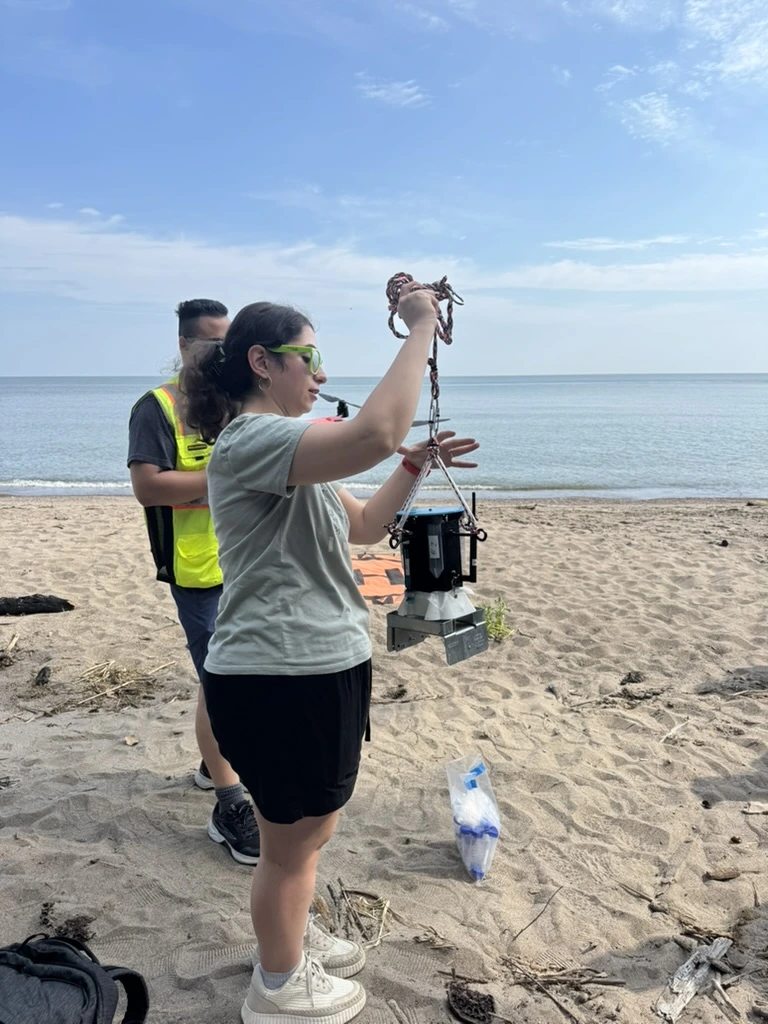
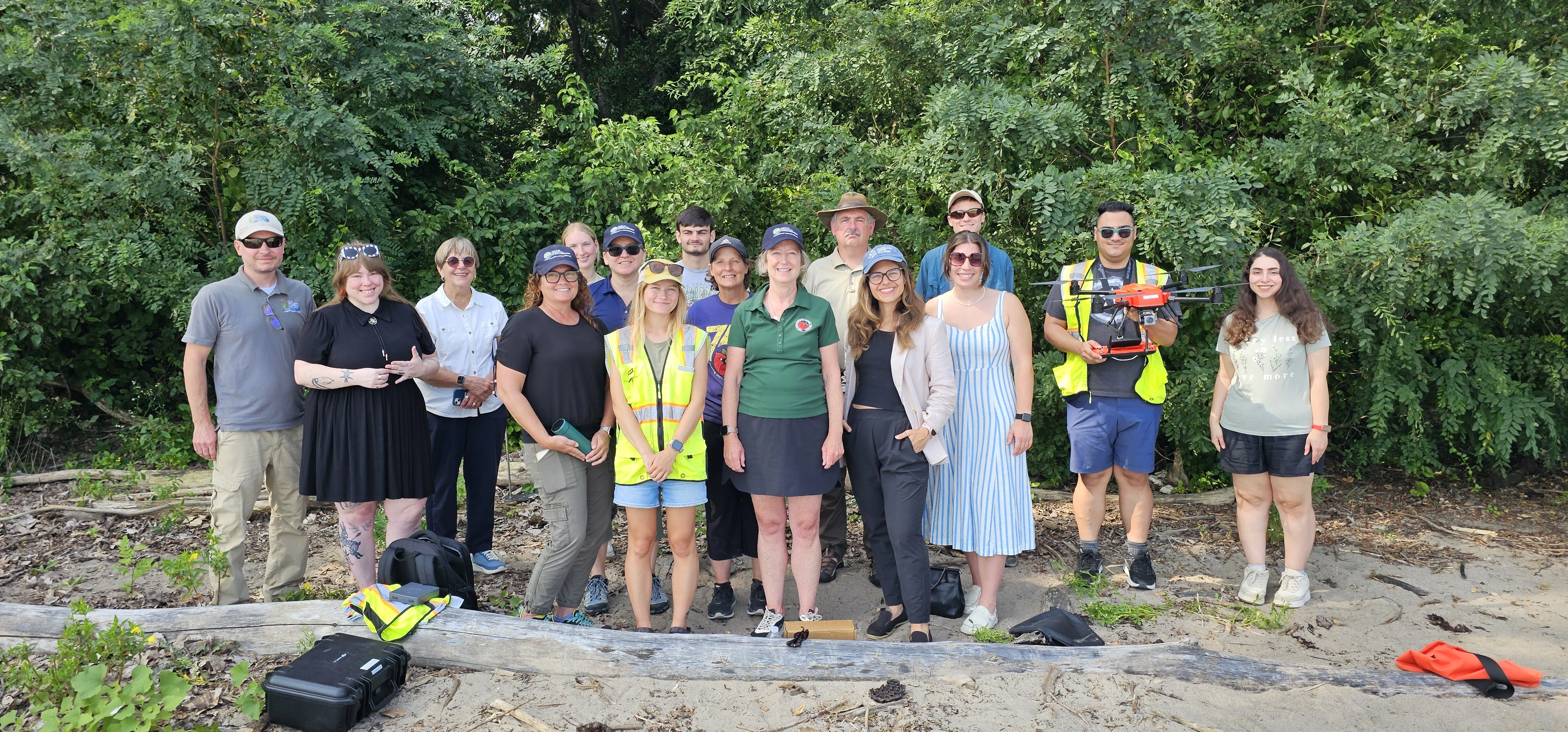
This testbed season, Cleveland Water Alliance (CWA) worked with the University of Vermont (UVM) WISE team, led by professor Tian Xia, with Ph.D. students Soheyl Faghir Hagh and Parmida Amngostar to deploy and stress-test their cutting-edge drone-based water sampling and wireless sensing system. CWA provided the research team with access to the real-world conditions of Lake Erie, the largest body of water the UVM team had ever trialed in. This deployment tested the operational limits of their autonomous technology, which uses edge machine learning to intelligently collect samples and remotely sense water quality, and helped the UVM team identify crucial areas for refinement and improvement.
Testing in Lake Erie
For a complex system relying on robotics, sensors, and the Internet of Things (IoT), validation in a large, dynamic environment is essential. CWA's testbed network offered UVM unparalleled advantages. Lake Erie is the largest body of water the UVM WISE team has tested on, and this vast scale allowed them to perform essential stress tests that couldn't be replicated in smaller research settings, testing and validating parameters such as the transmission range, speed, stability, reliability and performance in high-wind environments.
This was vital for proving the system’s operational range and endurance: "In this test, we were able to actually pilot the drone and push it to its limits and see how far it could go, how many samples they could cover and what is the larger area that they could cover with the battery life of the drone or the system itself," explained Soheyl.
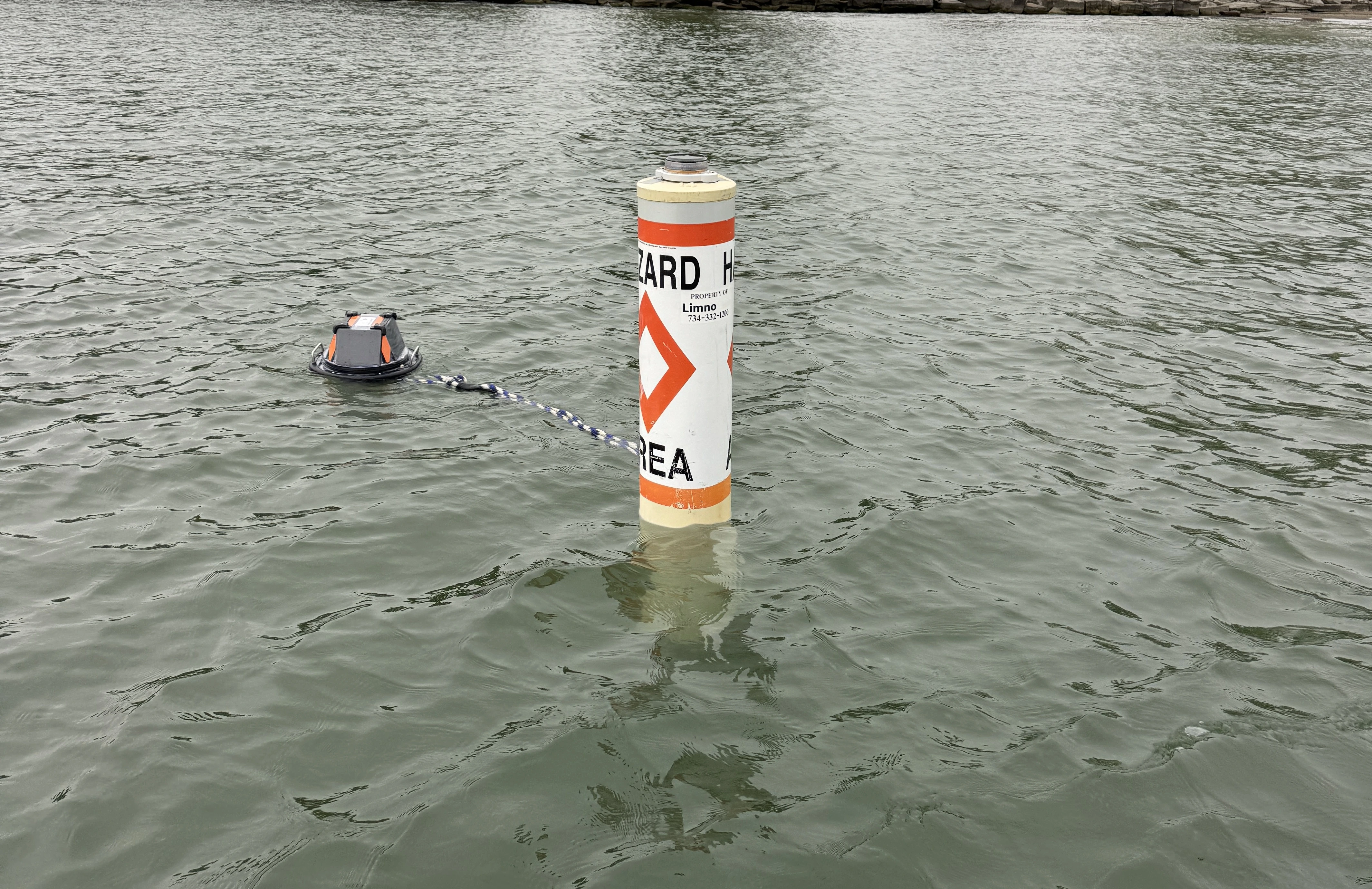
Additionally, our testbed network is equipped with a state-of-the-art Long-range Wide Area Network (LoRaWAN) telecommunications network, making it the largest digitally connected freshwater body globally. Since the UVM system is an IoT-based product, accessing this infrastructure was crucial for validating its data transmission capabilities and reliability in real-time. Our network also includes existing buoys and commercial monitoring systems. This allowed the UVM team to conduct side-by-side comparisons of their drone's sensor readings, ensuring accuracy against validated, deployed technology.
A New Solution for Traditional Challenges
UVM WISE team has developed a technology that is an autonomous, drone-attachable system that includes an autosampler and an expandable suite of sensors (including temperature, turbidity, conductivity, TDS, pH and depth as default sensors). It is designed to fundamentally change how water quality data is collected, particularly for rapidly developing threats like harmful algal blooms (HABs), emerging contaminants, PFAS, oil spill and more.
The core differentiator of their technology is intelligent, targeted sampling. The system uses on-board machine learning to analyze sensor values (pH, temperature, TDS, and turbidity) to predict chlorophyll concentration, a critical indicator of toxic algae. This allows the drone to only collect a physical water sample when the concentration exceeds a predetermined threshold, thereby prioritizing high-risk areas for sampling.
The system also addresses a key limitation of current methods: water disturbance. As professor Xia explained, using a boat can disrupt and mix the water, disturb algae patterns, introduce more air into water and cause "extra noise or perturbation into the system." Their drone minimizes this issue:
"If you can just bring the sampler into a point or node and then lift it up to the next location, that would minimize that disruption and help us preserve the original conditions of the lake."
The Path to Commercialization
The real-world testing provided through CWA’s testbed generated several key insights that will directly inform the system's refinement:
- Hardware Improvements: The team identified a need to increase the sample volume to 200 milliliters to meet standard laboratory requirements for parameters like nitrate and ammonia. They are also developing a winch mechanism to safely lower the sampler without bringing the entire drone close to the water surface, greatly improving safety, operation and increasing the sampling depth.
- Expansion of Sensor Capability: Feedback highlighted the utility of adding a dissolved oxygen (DO) sensor to their system, broadening its appeal to water professionals.
The UVM WISE team states that their technology is now at TRL 7 (Technology Readiness Level 7), and they are now focused on finding funding and licensing opportunities. In addition to providing access to trialing opportunities, CWA also helps connect innovators with potential funding sources and introduces them to key industry stakeholders and potential pilot partners, accelerating their path toward mass production and market entry.

.svg)


.webp)
.webp)