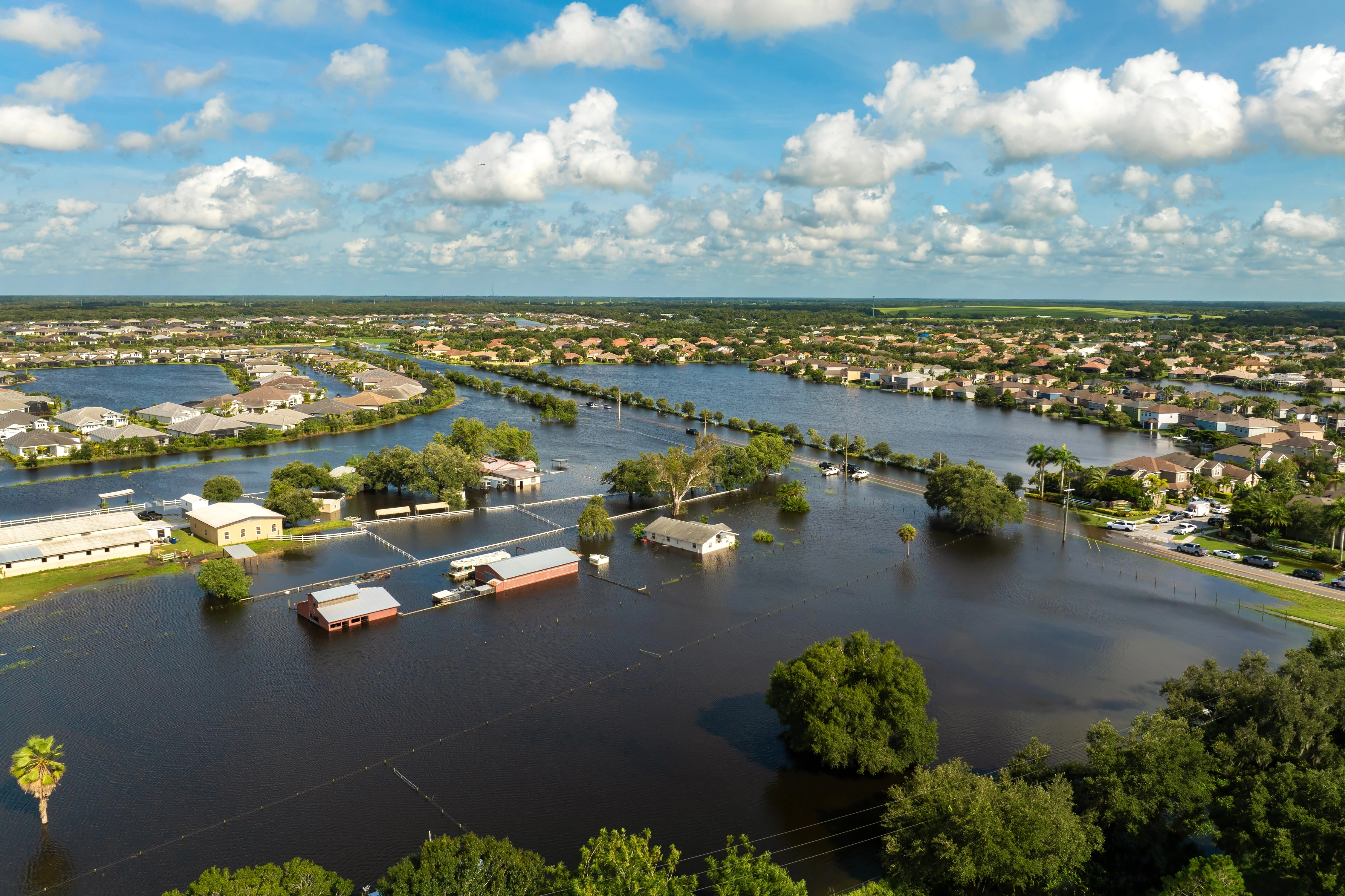
Cleveland Water Alliance served as a digital testbed for UK-based Previsico, providing historical Smart Lake Erie Watershed data to calibrate and train their AI flood prediction models for expansion into the Great Lakes market.
Listen to this article
When thinking about a Cleveland Water Alliance (CWA) testbed deployment, physical hardware like sensors, smart buoys, and sampling tools being trialed in the water is what typically comes to mind. While physical technology trials remain a major part of our testbed operations, the evolution of water technology is shifting how innovation happens.
Today, data itself has become essential digital infrastructure. As artificial intelligence and machine learning advance within the water sector, tech developers need high-quality, real-world data to train, calibrate, and validate their algorithms.
A Digital Training Ground for Advanced Software
Through our Smart Lake Erie Watershed (SLEW), CWA maintains a telecommunications network covering 7,750 square miles with over 200 connected IoT sensors, establishing the largest digitally connected freshwater body in the world. This network's data also serves as a digital training ground for advanced software.
CWA recently completed a data deployment with UK-based flood technology company Previsico to help them refine their predictive models for North American expansion.
We were already gathering the data, for our own purposes, that Previsico needed to train their model," explains Emily Hamilton, Innovation Advocate & Deal Flow Analyst at Cleveland Water Alliance. "Instead of doing the standardized deployment, where we get a piece of hardware, find a location, and deploy in the real world; we pulled the data from water level sensors that are already existing within the watershed and delivered that to Previsico."
Surface Water Warning
Founded in 2019, Previsico focuses on a critical gap in flood management: surface water, or stormwater, flooding.
Government weather alerts regularly cover major river and coastal flooding, but predicting hyper-local stormwater buildup on roads, near small streams, or around specific commercial properties remains difficult. Broad regional weather forecasts can indicate rain, but they do not show where water will collect or which specific buildings are at risk.
Previsico addresses this issue by combining an advanced hydrodynamic flood model with on-site water level sensors, generating property-level flood predictions up to 48 hours in advance.
"Weather forecasts are useful, but they're very broad... If you're going to make a decision like, 'I'm going to close a production line,' you can't really rely on a weather forecast to make those sort of decisions," explains Jonathan Jackson, CEO of Previsico. "What we're effectively doing is taking that weather data and processing it through our flood model... to give people insight at a much greater granularity."
While an advanced forecast gives property owners time to prepare, real-time sensor data provides the verification needed to execute critical response plans, such as deploying flood barriers or protecting critical equipment.
Powering AI Models with Real-World Data
To forecast how rainfall converts into actual flood risk, predictive models require historical water data to establish accurate baselines and trigger points. That is where CWA’s Smart Lake Erie Watershed infrastructure comes in.
By leveraging historical water level data collected across SLEW’s sensor network, Previsico can calibrate its models to better understand how local streams and drainage networks respond during heavy rain events.
"CWA’s sensor network monitors the water levels as they rise... we take that data, ingest it into our model, and then communicate it out to the client," says Jonathan. "So a client who's received the forecast... can share those same central warnings so that they can then take action because they've now got that full picture and can have the confidence to act."
By utilizing real-world environmental data, AI models move beyond general calculations to deliver reliable, location-specific intelligence.
Expanding into the Great Lakes Market
Having commercialized its platform in the UK and completed successful initial trials in the US, Previsico is working to expand its footprint into the Great Lakes region. The Great Lakes represent a vital commercial hub, but the region’s intense weather patterns and complex storm dynamics present distinct flood risks for businesses, utilities, and municipalities.
Training AI models on regional conditions is crucial before scaling. Lake Erie's environment presents unique challenges, including seiches, wind-driven events where water is pushed to one side of the lake, causing rapid water-level shifts and localized flooding. Because CWA's dataset included recorded seiche activity, Previsico was able to train its algorithms against these extreme regional dynamics.
"A lot of the data that Previsico has been utilizing or collecting on their own would be based off of the geographic locations where they're currently operating," says Emily. "The Great Lakes experience increased storm events compared to other areas, and it's critical for their model to be able to operate here by being trained on the weather conditions and the water conditions that exist here."
By providing historical data from our Smart Lake Erie Watershed, CWA helped Previsico take steps toward entering the US market, allowing them to calibrate their flood prediction models against the specific conditions of the Great Lakes before scaling their solution across North America.
Powering AI-Driven Water Innovation
As the water sector continues to adopt machine learning and advanced analytics, the success of these technologies will rely directly on the quality of the data driving them. CWA’s testbed capabilities extend far beyond physical hardware deployments, offering the digital infrastructure required to build, test, and commercialize next-generation water technologies.

.svg)


.webp)

.webp)
.webp)