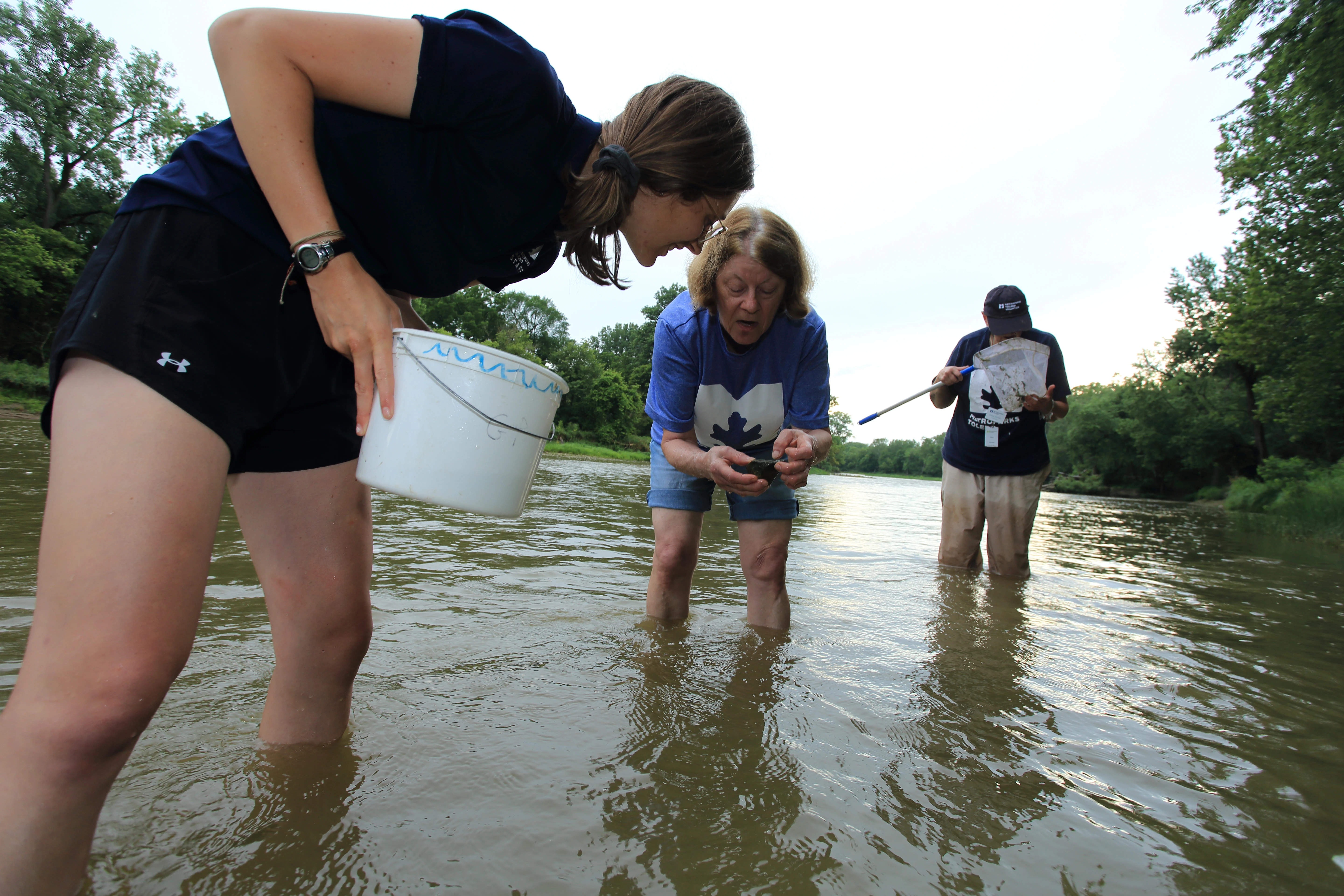
Lake Erie Volunteer Science Network (LEVSN) has achieved a major milestone with its standardized data officially recognized as credible and usable by the Ohio EPA and others. By sharing this high-quality information across national and international platforms, LEVSN is making it easier than ever to monitor and manage the health of our Great Lakes.
Listen to this article
Lake Erie Volunteer Science Network (LEVSN), a core initiative of the Cleveland Water Alliance (CWA), is a regional collaboration that empowers community members to collect, share, and engage with water quality data for the conservation and enrichment of our Great Lakes. Last year's efforts were hugely successful, marked by major milestones ranging from improving data credibility to expanding the network's influence across the Great Lakes region. Our dedicated network of local hubs, including conservation districts, watershed groups, park systems, and others, continues to power this critical effort, validating the impact of community science.
Ohio EPA Formally Recognizes LEVSN Data as Credible
This past year, the Ohio Environmental Protection Agency (Ohio EPA) officially recognized data collected by our Ohio-based LEVSN groups as Level 2 Credible Data. This designation is critical, as it confirms the data's suitability for use in long-term trend analysis and its contribution to regional assessments of environmental conditions.
While Ohio EPA's Credible Data Program typically requires individual monitoring groups to complete extensive application processes, LEVSN's established standardized operating procedures (SOPs) and comprehensive quality assurance frameworks allowed us to develop a scalable pathway for unified approval.
“Having the state environmental agencies accept the data as credible has been one of the biggest goals for the Volunteer Science Network since its inception," shared Max Herzog, CWA’s Deputy Director of Programs and Partnerships and LEVSN Program Lead. "Their stamp of approval means a lot in terms of the credibility of the data, which is one of the core goals of the network: to produce data that's trustworthy."
This streamlined process allows one authorized LEVSN partner to certify the collective study plan, significantly simplifying the administrative effort for individual local hubs. This foundational step validates the high quality of our volunteers' work and enables the seamless integration of community-collected data into future environmental planning and resource allocation decisions.
Connecting LEVSN Data to National and International Platforms
Enhancing the visibility and usability of the data collected is a core objective of the LEVSN Program. This year, we significantly expanded the reach of the data gathered by our local hubs, making it easily discoverable for researchers and decision-makers across the country.
Because all LEVSN groups collect and manage their data using standardized protocols within the Water Reporter platform, CWA can efficiently and automatically transfer this data to major national and international water quality repositories.
- Great Lakes DataStream: We have successfully scaled our connection to Great Lakes DataStream, a major aggregator of water quality data managed by the Gordon Foundation in Canada. This integration ensures that researchers and policymakers across the entire Great Lakes basin have access to LEVSN data.
- EPA Water Quality Exchange (WQX): LEVSN data is also being submitted to the federal EPA Water Quality Exchange (WQX), the primary U.S. federal repository for surface water quality data. This places our community-collected data directly in front of federal agencies and state regulators, substantially increasing its potential for impact.
The network’s standardized data collection and management creates a scalable and streamlined process that distributes high-quality information to major platforms like the Ohio EPA, Great Lakes DataStream, and the EPA Water Quality Exchange. By simply adding data to Water Reporter, individual groups can ensure their findings are widely accessible without additional administrative effort.
Building a Resilient Network
Starting as an initial effort under the Great Lakes One Water (GLOW) Partnership, LEVSN has evolved into an impactful network sustained by the commitment of its members. This coming April will mark the start of our fifth standardized field season of collecting water quality data. Max Herzog reflects on the evolution of the network:
"It's been really amazing to see the groups come together and realize what it is that they can do as a collective, and kind of move from, 'This is cool, but it seems like a lot to take on,' to 'This is really a part of the work that we do, and this is a driver of why we're excited to do this work.' We've moved from paying groups to come to the table to them sitting in the driver's seat, deciding what comes next, and doing the work to keep things moving and growing."
The success of LEVSN is a testament to the power of community engagement. As we enter the 2026 field season, CWA is committed to empowering communities, demonstrating the credibility of volunteer data, and advancing the monitoring and management of Great Lakes water resources.
If you are interested in supporting or partnering with LEVSN, please reach out to Max Herzog at mherzog@clewa.org. Together, we can ensure a healthier future for all Lake Erie Basin communities.

.svg)


.webp)
.webp)